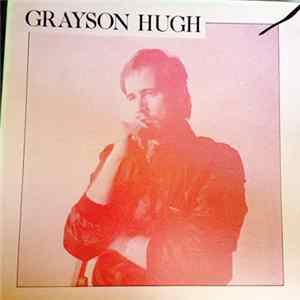
» » Grayson Hugh - Grayson Hugh

Grayson Hugh - Grayson Hugh mp3

Tracklist

1When You're Young And In The Picture6:09
2Madness Of The Heart5:29
3Just When I Was Dancing5:36
4There's No Such Thing As Those Walls7:13
5City Dawn13:16
6In The Hour Of The Loon6:18

Credits

  • Drums, CongasRob Gottfried
  • Electric BassDavid Stoltz
  • Electric Guitar, Twelve-String Guitar, E-BowTom Majesky
  • Producer, Recorded By, Mixed By, Mastered ByRon Scalise
  • Written By, Arranged By, Concert Grand Piano, Organ, Lead Vocals, Harmony Vocals, Alto SaxophoneGrayson Hugh

Notes

This self-titled album was singer/songwriter/pianist Grayson Hugh's first. It was released on March 1, 1981 on One of Nineteen Records, and was recorded and produced by Ron Scalise at the Nineteen, Glastonbury, CT. It was mastered by Ron Scalise at Criteria Studios, Miami, Florida.

Info

Grayson Hugh born October 30, 1960 is an American singer-songwriter, pianist, Hammond B3 organ player and composer. He is best known for his 1988 hit Talk It Over, and his other blue-eyed soul hits Bring It All Back and How 'Bout Us. Hugh was the first generation of his family to be born in the United States, and grew up surrounded by classical music. His father was classical music radio host Ivor Hugh born in Hammersmith, England his mother was born in Shanghai, the daughter of missionary. Grayson Hugh Live At the Ace of Clubs, Nashville, Tennessee 1021989 - Grayson Hugh. Лента с персональными рекомендациями и музыкальными новинками, радио, подборки на любой вкус, удобное управление своей коллекцией. Grayson Hugh Live At the Ace of Clubs, Nashville, Tennessee 1021989. Grayson Hugh: American singer-songwriter, pianist, Hammond B3 organ player and composer. That's Cool, Blind to Reason, Romantic Heart и другие песни. Album 1980 6 Songs. Grayson Hugh. Rock , 1980. to music from Grayson Hugh like Talk It Over, I Can't Untie You from Me & more. Find the latest tracks, albums, and images from Grayson Hugh. 23 listeners. Play album. Skip to YouTube video. Посмотреть сведения об участниках альбома, рецензии, композиции и приобрести альбом 1981 Vinyl от Grayson Hugh на page of Grayson Hugh, a songwriter artist from Western Hill Country of Connecticut. Grayson Hugh is an internationally acclaimed singer-songwriter, pianist, Hammond B3 organist, percussionist and composer. Just better. Hugh was hired to sing backup vocals on that album and subsequently signed to RCA Records as singer-songwriter in 1987. He broke into the Billboard Hot 100 in 1989 with three singles from his album Blind to Reason RCA Records, 1988. In 1988 Talk It Over, a song written by Sandy Linzer and Irwin Levine that Hugh arranged, reached the Top 20. Features Song Lyrics for Grayson Hugh's Grayson Hugh album. Grayson Hugh - Grayson Hugh Album Lyrics. When You're Young & In the Picture Lyrics

Grayson Hugh - Grayson Hugh mp3

Performer: Grayson Hugh

Title: Grayson Hugh

Country: US

Release date: 01 Mar 1981

Label: One Of Nineteen Records

Catalog: NTN1219

Genre: Jazz / Rock / Rythm / Pop

Size MP3: 2889 mb

Rating: 4.3 / 5

Votes: 774

Record source: Vinyl, LP

MP3 Related to Grayson Hugh - Grayson Hugh
Cemav
A Jazzy Rock-and-Blues Homebrew

Ever wish someone would come along who could sing like a fusion of Al Green and Steve Winwood, write music that blended influences as diverse as Yes and Ray Charles, and hammer the keyboards with Emersonian adroitness and Wonderous soul?


  Enter the prodigious Grayson Hugh, grown in Hartford’s back yard soil. Hugh spent a year recording his first album at the Nineteen Studios in Glastonbury, and the result is a sprawling, ambitious product that just drips with talent. 


Strange things happen within the circular borders of "Grayson Hugh", an album with happy ties to some of the musical brilliance of the 1960s. The album’s most magical interludes evoke some of the excitement of the early attempts to blend jazz, rock and blues – Winwood’s gutsy Traffic jams and Steve Katz and Bobby Colomby’s earliest dabblings in Blood, Sweat and Tears. The guts of the album, though, are sheer rhythm and blues, as practiced by Charles.


  None of the above, however, fully prepares the listeners for tours de force like "There’s No Such Thing As Those Walls", which matches a growly Charlseian vocal against a Hancocked funk-fusion piano-bass groove and gradually adds overlays of sax, honking in an almost Colemanish counterpoint. Before he has exhausted these possibilities, Hugh abruptly rips the seams out of the composition and erupts into a phosphorescent keyboard solo reminiscent of Keith Emerson’s careening attacks, pumped along by a juggernaut-like cymbals-to-bass rhythm track supplied by drummer Rob Gottfried and bassist Dave Stolz (whose relationship has its roots in the Chris Squire/Bill Bruford tandem of Yes’s middle period – all of which scarcely warns us of Tom Majesky’s whirring guitar solo to come. 


Well, let me tell you, it quickens the pulse to think they’re laying this stuff down just an infield fly away, in little old Glastonbury. (For those who worry about the quality of a “local product,” it should be noted that producer Ron Scalise has meticulously recorded, mixed and mastered the music. The sound qualities are far superior to 95 percent of the pop music released by major labels, and the high-grade vinyl is a welcome respite from the snap, crackle and pop garbage that the big labels mass-produce.) 

  
For all the brilliance of the material, "Grayson Hugh" does not necessarily herald great commercial success for its author. Although Hugh occasionally writes attractive pop hooks, as in the country and western-inflected Just When I Was Dancing, he is never content to let the matter rest there. J"ust When I Was Dancing" begins as a fairly sraightforward pop song, but Hugh pushes it into unpredictable regions, and the song expounds at least four separate musical themes – a lot for a casual radio listener to digest in five and one half minutes. 


A song like the epic "City Dawn" – which takes off from its initial rhythm-and-blues premise like a trout on a long line, twisting and diving through a daring musical territory – will never appear on the narrow horizons of album-oriented rock radio. Hugh’s music is marvelous, but it may prove too sophisticated for its marketplace – haute cuisine fare in the junk food world of contemporary pop. The adventurous musical palates of the 1960s are harder to find these days. 

  The most commercially accessible tune on the album is "When You’re Young and in the Picture", which Hugh, for better or worse, pegged to Majesky’s Motpwnish guitar lick, giving the cut a gently rocking Isley Brothers feel. (I have heard Hugh perform the piece more effectively as a driving jazz-inspired number, reminiscent of Traffic’s Glad). "Madness of the Heart", an impressionistic jazz ballad is also within the grasp of most pop listeners. 


It remains to be seen, however, if the “adult contemporary” patrons of Ambrosia and Eddie Rabbitt are ready for the eerie naturalism and exquisite counterpoint of "In The Hour of the Loon". 


Regardless of whether or not the album succeeds, "Grayson Hugh" matches up in excitement, diversity and sophistication to the best rock music recorded in 1981. Hugh and his band have achieved a meritorious level of musicianship, and his music is the kind that yields new delights and insights with each new listening.

  Hartford ought to be proud.

- Colin McEnroe – May 3, 1981, The Hartford Courant
Cemav
A Jazzy Rock-and-Blues Homebrew

Ever wish someone would come along who could sing like a fusion of Al Green and Steve Winwood, write music that blended influences as diverse as Yes and Ray Charles, and hammer the keyboards with Emersonian adroitness and Wonderous soul?


  Enter the prodigious Grayson Hugh, grown in Hartford’s back yard soil. Hugh spent a year recording his first album at the Nineteen Studios in Glastonbury, and the result is a sprawling, ambitious product that just drips with talent. 


Strange things happen within the circular borders of "Grayson Hugh", an album with happy ties to some of the musical brilliance of the 1960s. The album’s most magical interludes evoke some of the excitement of the early attempts to blend jazz, rock and blues – Winwood’s gutsy Traffic jams and Steve Katz and Bobby Colomby’s earliest dabblings in Blood, Sweat and Tears. The guts of the album, though, are sheer rhythm and blues, as practiced by Charles.


  None of the above, however, fully prepares the listeners for tours de force like "There’s No Such Thing As Those Walls", which matches a growly Charlseian vocal against a Hancocked funk-fusion piano-bass groove and gradually adds overlays of sax, honking in an almost Colemanish counterpoint. Before he has exhausted these possibilities, Hugh abruptly rips the seams out of the composition and erupts into a phosphorescent keyboard solo reminiscent of Keith Emerson’s careening attacks, pumped along by a juggernaut-like cymbals-to-bass rhythm track supplied by drummer Rob Gottfried and bassist Dave Stolz (whose relationship has its roots in the Chris Squire/Bill Bruford tandem of Yes’s middle period – all of which scarcely warns us of Tom Majesky’s whirring guitar solo to come. 


Well, let me tell you, it quickens the pulse to think they’re laying this stuff down just an infield fly away, in little old Glastonbury. (For those who worry about the quality of a “local product,” it should be noted that producer Ron Scalise has meticulously recorded, mixed and mastered the music. The sound qualities are far superior to 95 percent of the pop music released by major labels, and the high-grade vinyl is a welcome respite from the snap, crackle and pop garbage that the big labels mass-produce.) 

  
For all the brilliance of the material, "Grayson Hugh" does not necessarily herald great commercial success for its author. Although Hugh occasionally writes attractive pop hooks, as in the country and western-inflected Just When I Was Dancing, he is never content to let the matter rest there. J"ust When I Was Dancing" begins as a fairly sraightforward pop song, but Hugh pushes it into unpredictable regions, and the song expounds at least four separate musical themes – a lot for a casual radio listener to digest in five and one half minutes. 


A song like the epic "City Dawn" – which takes off from its initial rhythm-and-blues premise like a trout on a long line, twisting and diving through a daring musical territory – will never appear on the narrow horizons of album-oriented rock radio. Hugh’s music is marvelous, but it may prove too sophisticated for its marketplace – haute cuisine fare in the junk food world of contemporary pop. The adventurous musical palates of the 1960s are harder to find these days. 

  The most commercially accessible tune on the album is "When You’re Young and in the Picture", which Hugh, for better or worse, pegged to Majesky’s Motpwnish guitar lick, giving the cut a gently rocking Isley Brothers feel. (I have heard Hugh perform the piece more effectively as a driving jazz-inspired number, reminiscent of Traffic’s Glad). "Madness of the Heart", an impressionistic jazz ballad is also within the grasp of most pop listeners. 


It remains to be seen, however, if the “adult contemporary” patrons of Ambrosia and Eddie Rabbitt are ready for the eerie naturalism and exquisite counterpoint of "In The Hour of the Loon". 


Regardless of whether or not the album succeeds, "Grayson Hugh" matches up in excitement, diversity and sophistication to the best rock music recorded in 1981. Hugh and his band have achieved a meritorious level of musicianship, and his music is the kind that yields new delights and insights with each new listening.

  Hartford ought to be proud.

- Colin McEnroe – May 3, 1981, The Hartford Courant