Computer - What Was Computer? mp3
Tracklist
| 1 | Untitled |
| 2 | Untitled |
Notes
Compositions for computational synthesis.
Compositions were realized by utilizing "Drunkard's Walk" and "Mistake-ist" forms combined with an exploitation of loss-heavy compression styled for computational synthesis.
Edition of 100.
Info
A computer is a machine that can be instructed to carry out sequences of arithmetic or logical operations automatically via computer programming. Modern computers have the ability to follow generalized sets of operations, called programs. These programs enable computers to perform an extremely wide range of tasks. A complete computer including the hardware, the operating system main software, and peripheral equipment required and used for full operation can be referred to as a computer system. The word computer was a job title assigned to primarily women who used these calculators to perform mathematical calculations. By the 1920s, British scientist Lewis Fry Richardson's interest in weather prediction led him to propose human computers and numerical analysis to model the weather to this day, the most powerful computers on Earth are needed to adequately model its weather. This appears to be the first published description of programming, so Ada Lovelace is widely regarded as the first computer programmer. Following Babbage, although unaware of his earlier work, was Percy Ludgate, a clerk to a corn merchant in Dublin, Ireland. The word computer was first used in 1613 in the book The Yong Mans Gleanings by Richard Braithwaite and originally described a human who performed calculations or computations. The definition of a computer remained the same until the end of the 19th century, when the industrial revolution gave rise to machines whose primary purpose was calculating. First mechanical computer or automatic computing engine concept. In 1822, Charles Babbage conceptualized and began developing the Difference Engine, considered to be the first automatic computing machine. Every computer supports some form of input, processing, and output. This is less obvious on a primitive device such as the abacus where input, output and processing are simply the act of moving the pebbles into new positions, seeing the changed positions, and counting. Regardless, this is what computing is all about, in a nutshell. The first non-general purpose computer was ABC AtanasoffBerry Computer, and other similar computers of this era included german Z3, ten British Colossus computers, LEO, Harvard Mark I, and UNIVAC. IBM 1401. Second Generation Computers 1955 1960. Computer - Computer - The first computer: By the second decade of the 19th century, a number of ideas necessary for the invention of the computer were in the air. First, the potential benefits to science and industry of being able to automate routine calculations were appreciated, as they had not been a century earlier. Specific methods to make automated calculation more practical, such as doing multiplication by adding logarithms or by repeating addition, had been invented, and experience with both analog and digital devices had shown some of the benefits of each approach. The Jacquard loom . The history of computing hardware covers the developments from early simple devices to aid calculation to modern day computers. Before the 20th century, most calculations were done by humans. Early mechanical tools to help humans with digital calculations, such as the abacus, were called calculating machines, by proprietary names, or even as they are now, calculators. The machine operator was called the computer. The computer was born not for entertainment or email but out of a need to solve a serious number-crunching crisis. By 1880, the U. population had grown so large that it took more than seven years to tabulate the U. Census results. The government sought a faster way to get the job done, giving rise to punch-card based computers that took up entire rooms. Today, we carry more computing power on our smartphones than was available in these early models. The following brief history of computing is a timeline of how computers evolved from their humble beginnings to the machines of today that sur. Although ABC computer was the first digital computer but many still consider the ENIAC was the first digital computer, because it was first operational electronic digital computer. It was used for weather prediction, atomic-energy calculations, thermal ignition, and other scientific uses. Who invented the first programmable computer and where In 1938, German civil engineer, Konrad Zuse built world's first freely programmable binary driven mechanical computer what he called Z1. Konrad Zuse has considered the inventor of the modern computer. It was programmable via punched tape or punched. The word computer has a very interesting origin. It was first used in the 16th century for a person who used to compute, i. do calculations. The word was used in the same sense as a noun until the 20th century. Women were hired as human computers to carry out all forms of calculations and computations. By the last part of the 19th century, the word was also used to describe machines that did calculations. The modern day use of the word is generally to describe programmable digital devices that run on electricity. Early History of Computer. Since the evolution of humans, devices have been u. Before each Computerphile interview we asked guests and regular contributors about their first computer
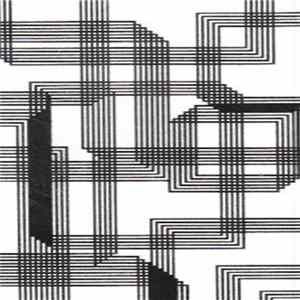
Performer: Computer
Title: What Was Computer?
Country: US
Release date: 2010
Label: Scumbag Relations
Style: Abstract, Experimental
Catalog: no.155
Genre: Electronic
Size MP3: 2622 mb
Rating: 4.1 / 5
Votes: 871
Record source: Cassette, Limited Edition, C20
MP3 Related to Computer - What Was Computer?